01
Compressor
The pump. It squeezes refrigerant so it can carry heat out of the car.
When it fails: Warm air at idle, a clutch that will not engage, or a loud clatter when the AC turns on.
Compressor repairRepair services
Car AC freon recharge in Oakland Park, FL. Pressures and leak check first, $200/hr diagnostic labor, total approved before work. Call (954) 714-8099.
The quick answer
Yes. Front Line Auto recharges car AC freon in Oakland Park, but it checks the pressures and looks for the leak first, because a sealed system that is low has lost refrigerant somewhere.
Updated
How your AC works
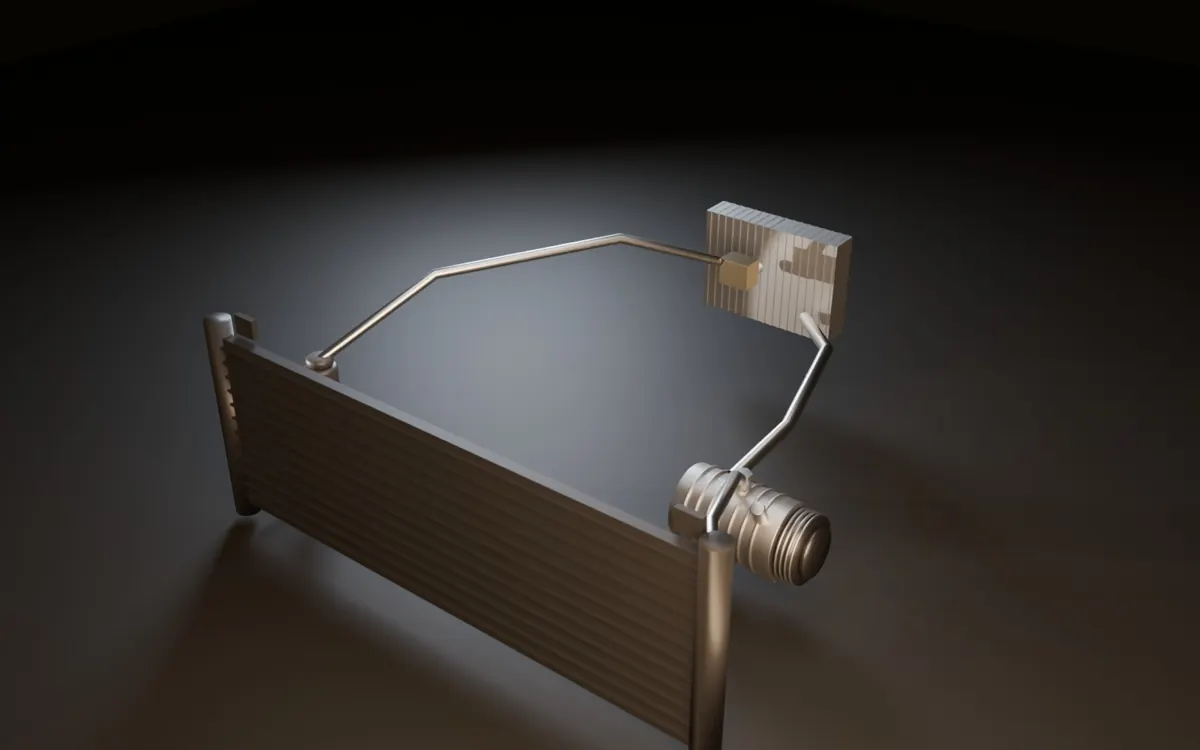
Refrigerant leaves the compressor hot, gives its heat away at the front of the car, and comes back cold through the dash. Tap a part to see what it does and how it fails. Low on refrigerant? That is a leak somewhere in this loop, and we find it before we recharge.
01
The pump. It squeezes refrigerant so it can carry heat out of the car.
When it fails: Warm air at idle, a clutch that will not engage, or a loud clatter when the AC turns on.
Compressor repair02
The radiator for your AC, in front of the engine radiator. It sheds the heat the compressor built up.
When it fails: Cold on the highway, warm in traffic. Road debris can bend fins or puncture it.
When the AC is not cold03
A filter canister that pulls moisture and debris out of the refrigerant.
When it fails: Cooling that fades over weeks. It is replaced whenever the system has been opened.
Recharge, done right04
Drops the pressure right before the evaporator, so the refrigerant turns cold.
When it fails: Cold at first, then fading; frost on the valve; vents that are cold on one side.
AC repair in Oakland Park05
The cold coil behind your dash. The blower pushes cabin air through it.
When it fails: A musty smell, weak airflow, or leak dye showing at the drain under the car.
Leak detectionHigh side: hot, under pressure Low side: cold
A car AC and freon recharge should follow proper diagnostic pressure and leak testing, not replace it. Front Line Auto measures high- and low-side system pressures, tests vent temperatures, checks compressor engagement, inspects condenser fans, and locates refrigerant leaks before recharging your vehicle AC system. Recharging includes evacuating moisture, verifying vacuum hold, and recharging exact factory refrigerant weight with fresh lubricant.
Service work is easier to approve when the vehicle has been inspected and the repair path is explained first. Front Line Auto ties common repairs back to the actual condition of the car.
A car AC is a closed loop. It does not burn refrigerant the way an engine burns fuel, so if it is low, it leaked. The EPA says plainly that topping off or recharging improves cooling but does not permanently fix a leak, and that repairing or replacing the leaking part gives longer-lasting results. That is why Front Line Auto reads the pressures and checks the hoses, fittings, condenser and compressor seal before adding anything.
If the system holds, a recharge is the fix. If it does not, you get the leak and the price of the part that leaks, so you can decide between a recharge now and a repair that lasts. Either way you see the reading first, not a bill for a can of refrigerant that is gone by next month.
Source: EPA: options for recharging your car's air conditioner
No. Under Section 609 of the Clean Air Act, anyone paid to service a car's air conditioning must be trained and certified by an EPA-approved program and must use EPA-approved equipment to recover the old refrigerant. Venting it into the air is prohibited. The recovery step matters to you as well as to the law: the old charge comes out and is weighed, the system is held under vacuum to pull moisture out, and the new charge goes in by weight to the number printed on the under-hood label.
Guessing the amount from a gauge on a parts-store can is how systems end up overcharged, which cools worse and works the compressor harder in South Florida heat.
It depends on the year. The EPA notes that in 2012 automakers began moving light-duty vehicles from HFC-134a to lower-global-warming refrigerants such as HFO-1234yf. Older cars generally run R-134a; many newer ones run R-1234yf. The two are not interchangeable, and the label under the hood names the type and the charge weight for your car.
The yf systems also use different service fittings so the two cannot be mixed by accident, which is why a shop needs the matching equipment for each. When you call, give the year, make and model, and the shop will tell you whether it can recharge your system and what the visit covers before you drive over.
Source: EPA: refrigerant transition and environmental impacts
Call Front Line Auto at (954) 714-8099 when your car AC blows warm air, cools weakly in South Florida traffic, loses cold air shortly after a previous recharge, or makes hissing sounds from the vents.
Front Line Auto is an independent auto repair shop in Oakland Park at 3575 NW 31st Ave, Oakland Park, FL 33309. Call (954) 714-8099 before bringing in diagnostic, inspection, towing, or repair work.
Front Line Auto bills car AC work by labor time: diagnostic labor is $200 per hour ($250 per hour on European cars), plus the refrigerant and any part a leak calls for. You get the itemized total before work starts.
Only if nothing leaks. If the system was low, refrigerant escaped somewhere, and the EPA notes a recharge alone does not permanently fix a leak. The shop checks for the leak first and tells you what it found.
They can bring some cold back for a while, but they do not find the leak and it is easy to overcharge the system, which cools worse and strains the compressor.
Yes. Front Line Auto is a car repair shop. It does not service home or building air conditioners.